
A Moveable Treat
The Peanut Butter & Onion Sandwich

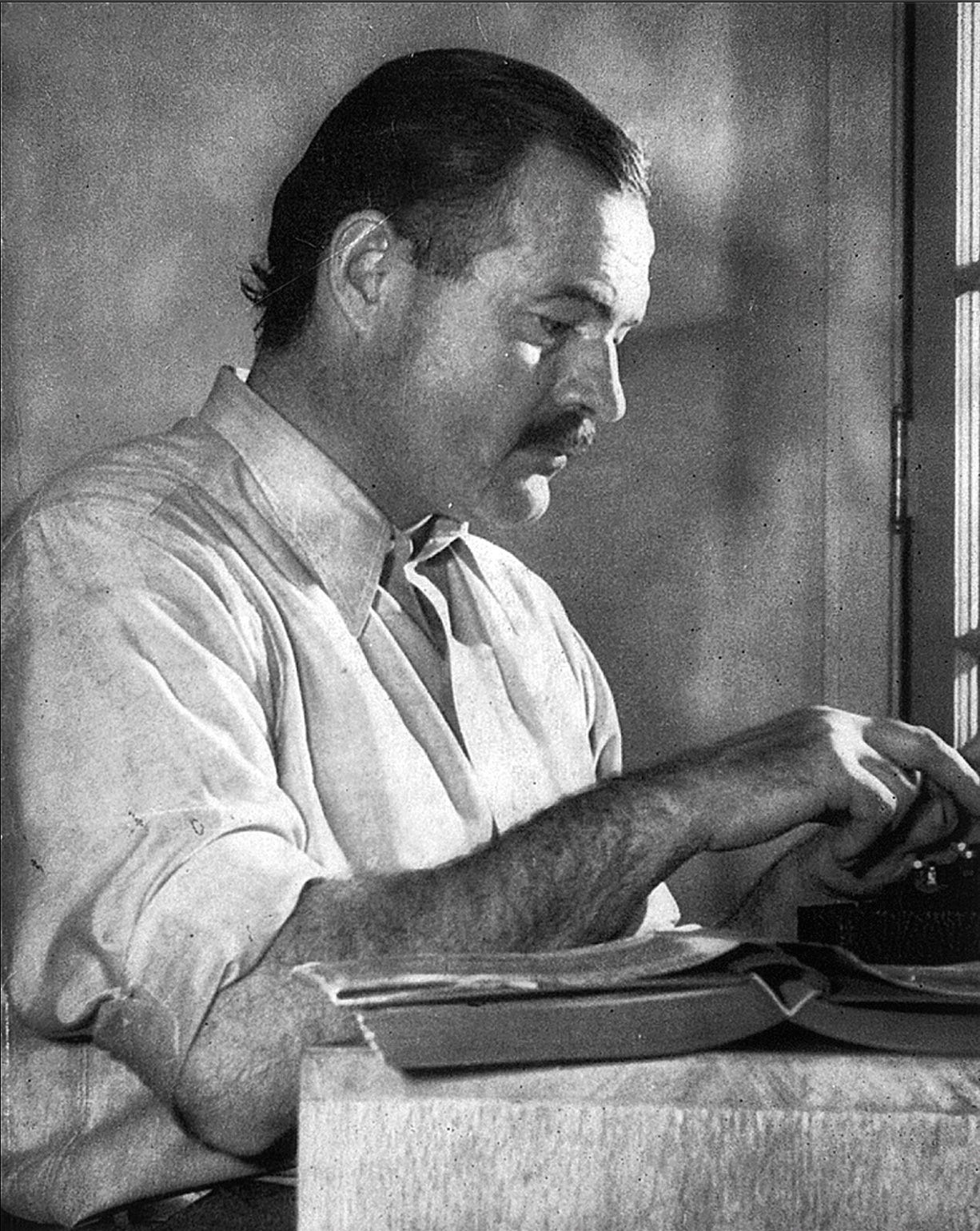
What fuels your creativity?
I'll give you a moment to think about it before moving on, but I want you to understand I'm curious to know what feeds your imagination in the literal sense, rather than the figurative. I'm interested in the meat and potatoes of the matter, if you like.
J.D. Salinger was a meat and potatoes man, preferring roast beef and mash as he worked before later abandoning them for the pleasures of Burger King.
F. Scott Fitzgerald like to eat canned meat and Uneeda Biscuits when he sat down to write. Franz Kafka guzzled milk, Mark Twain slurped down barrels of oysters, and Honoré de Balzac downed up to fifty Turkish coffees a day, one for every year he lived*.
Most writers have some sort of ingestible go-to that helps get them going or sustains them throughout an intense typing/scribbling session. Mine depends on the time of day.
If I write in the morning, I drink coffee with lots of milk and sugar because I have the pre-noon constitution of a six-year-old French garçon. If I write in the afternoon, I've got a tumbler of iced tea at my elbow. If I write at night, a small and very dry gin martini keeps me sufficiently lubricated because, as Nobel laureate Ernest Hemingway is famously misquoted as saying: "Write drunk, edit sober."
Sondheim liked a shot of vodka before writing, so I still feel I'm in good company.
Hemingway did, however, have a few well-documented food and drink items he liked to have on hand as he sat at his typewriter banging out novels and revising short stories. Black coffee with a shot of grappa, martinis, and daiquiris (The Hemingway Special) were a few of his preferred workaday tipples. He liked eating oysters when in Paris, obscenely thick burgers in Havana, and peanut butter and onion sandwiches almost anywhere.
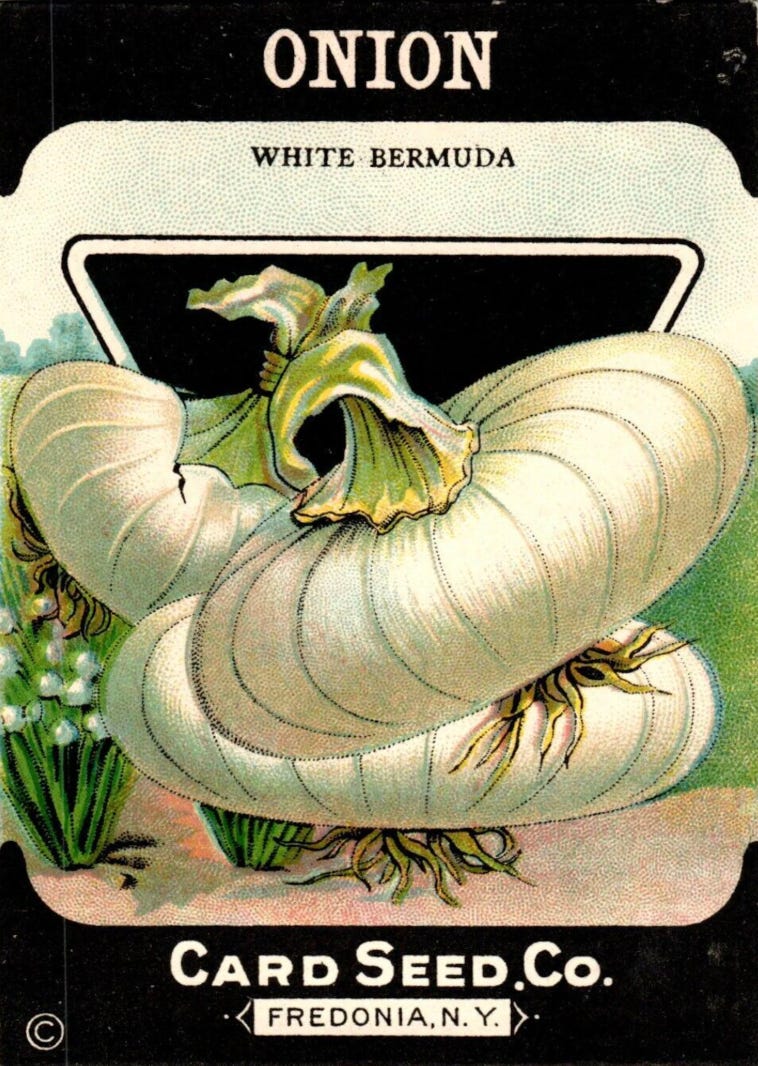
The man was crazy for onions—namely sweet Bermudas, which are very hard to come by these days. If Hemingway was out fishing, which was often, you could be certain he took along a few sandwiches, and those sandwiches invariably had onions in them.
In his posthumously published novel Islands in the Stream, protagonist Thomas Hudson was feeling peckish:
"Want to get me a sandwich?" he asked Ara. "Corned beef and raw onion or ham and egg and raw onion."
In another food-related exchange, he says to his fellow crew mate, Henry:
"Well, go down to the galley and see if that bottle of tea is cold and bring it up. Antonio's butchering the fish. So make a sandwich will you, please?"
"Sure. What kind of sandwich?"
"Peanut butter and onion if there's plenty of onion."
"Peanut butter and onion it is, sir."
When the sandwich is presented to Thomas wrapped in a segment of paper towel, he rhapsodizes:
"One of the highest points in the sandwich-maker's art. We call it the Mount Everest Special. For Commanders only."
Make of that what you like, but the man liked onions in practically everything. Even his martinis were garnished with onions, which technically turned them into Gibsons.
Hemingway's love of Allium cepa came by way of his father, Dr. Clarence Edmonds Hemingway, who showed his son how to forage for wild onions at Walloon Lake, Michigan, where he also taught Ernest to fish, likely associating the two things in the boy's mind.
Clarence thought onions to be the finest filling for sandwiches known to man. Ernest evidently agreed.
In addition to foraging and fishing, Ernest inherited his father's love of nature, hunting, and shotguns. Unfortunately, Dr. Hemingway also passed on a predisposition to severe depression and bipolar disorder.
And that, Dear Reader, is as far as we’re going to go in that direction today.
We're here to celebrate onions, peanut butter, white bread, and the man who loved putting them together.
And hopefully provide you with the courage to give the combination a try.
Because you absolutely should.
Live it up, I say. Hemingway certainly did.
Until he suddenly didn't.
The Peanut Butter & Onion Sandwich
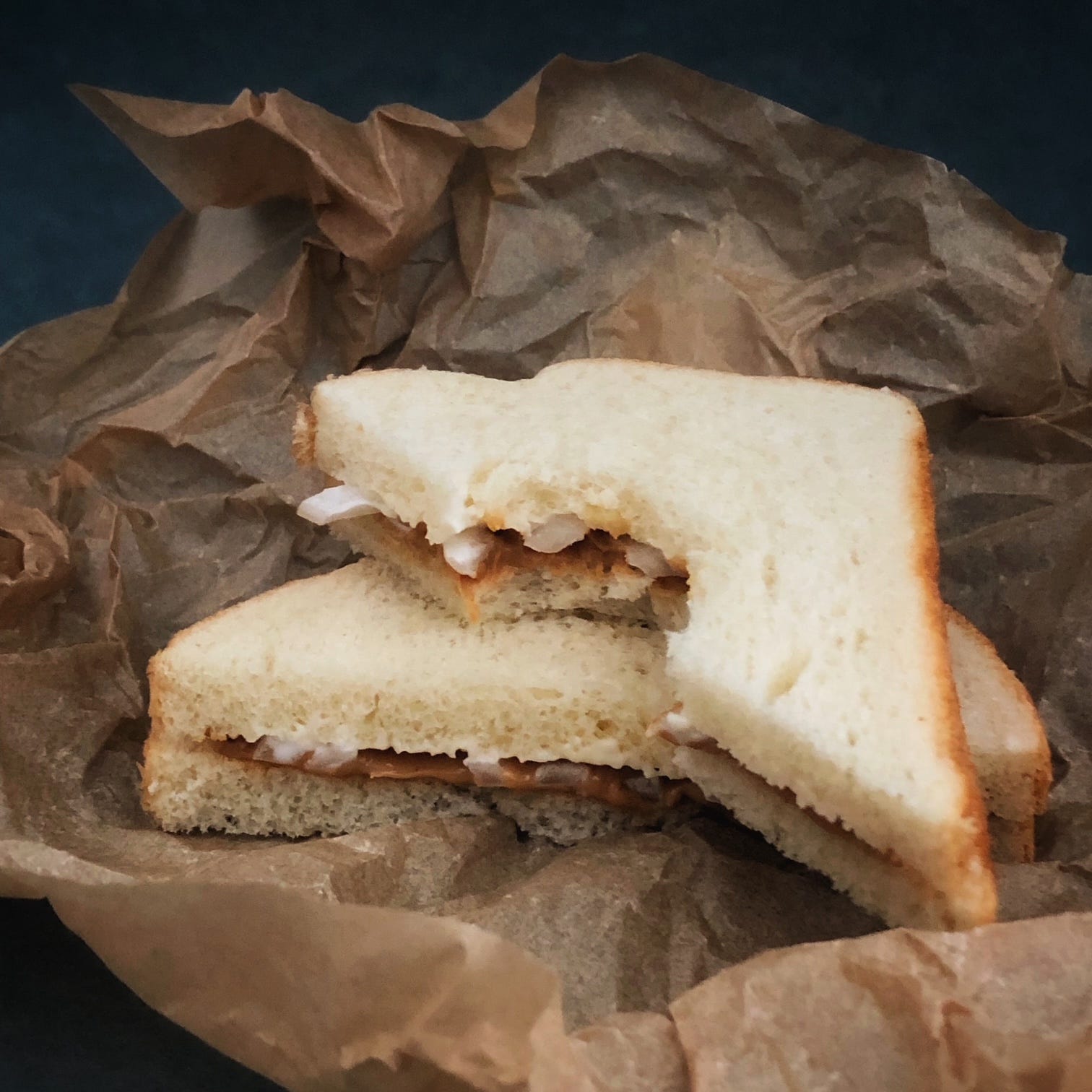
There are numerous ways to make a peanut butter and onion sandwich. Some aficionados spread a little (real) butter on the bread. Others like a thin layer of mayonnaise (pictured above, though I can’t remember why). There are people who like their bread lightly toasted and those who don't. Add what you like and I probably won’t tell you you’re wrong.
If one insists upon making the Mount Everest Special, however, one must remain steadfast in Hemingway's orthodoxy: peanut butter, thinly sliced onion, and white bread.
Like many food writers before me, I thought I'd find this sandwich disgusting. Like many food writers before me, I did not. In fact, I discovered I quite like it.
The Mount Everest Special is remarkable for its thrift and ease of construction. It's an exceptional sandwich for the writer struggling to make a living (see: author), who needs little in the way of cooking distraction and a lot in terms of protein to fuel the creative brain. It's also a very inexpensive way to feed yourself, which is both timely and timeless as a concern.
It's a coupling of lightly sweet and faintly sharp, of creaminess and crunch.
The Mount Everest Special isn't for everyone, but who wants to be everyone?
It is, after all, for Commanders only.
So, should you find me with one of these sandwiches in my hand, I'll have to insist you address me as Commander Mike.
Makes: one sandwich
Ingredients:
• Creamy peanut butter
• Sweet onion, thinly sliced (Vidalia, Maui, or any other sweet, white onion)
• 2 slices of white bread, very lightly toasted or placed nowhere near a heat source.
Preparation:
Spread peanut butter (as much as you like) evenly on one side of both pieces of bread.
Layer sliced onion (as much as you dare) over the peanut buttered side of one piece of bread.
Place the second piece of bread peanut butter side down over the onion slices in what we professionals call a “sandwiching action.”
Serve wrapped in a segment of paper towel to your favorite tough guy with the soul of an artist as you hunt for Nazis in the Bahamas in a re-purposed deep-sea fishing boat. Or to your favorite struggling writer.
P.S. I do actually want to know what food or beverage helps make you tick creatively, if any.
* Balzac’s immoderate coffee swilling more than likely contributed to his death from gangrene caused by severe congestive heart failure.
When my son asked how many onions to caramelize for French Onion Soup, I said “allium”
Journalists at The (UK's) Guardian once negotiated for the right to drink wine at their desks. The newspaper is fondly known as The Grauniad for it's consistent spelling mistakes. 🤔