
Heavy on The Starch
Or: A Visit to The French Laundry

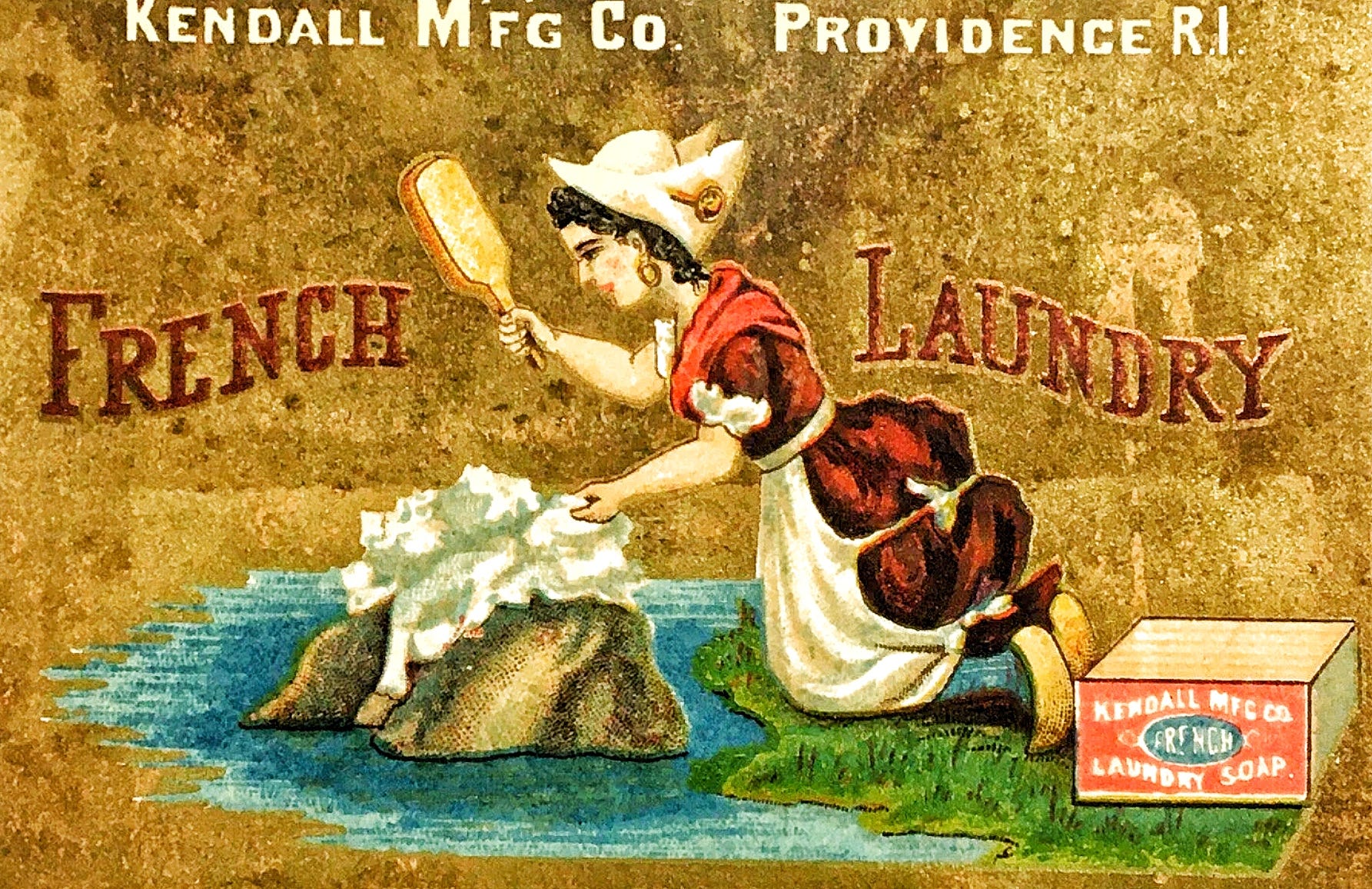
Hello Readers!
I’m currently working on two essays, neither of which has yet to meet with my satisfaction, but they’re getting there. The next new piece will be posted on Tuesday, July 28th.
In the meantime, I have thoroughly re-edited my very first restaurant review for KQED, which was written around the time Keeping Up with The Kardashians premiered.
I think it’s time for this essay to once again see the light of day. And for every single member of the Kardashian family to be cast into The Pit of Eternal Darkness.
There are some things in this world best left to the imagination—people, places, or events so romanticized they could never live up to the hype. Sex with a matador is one example that comes to mind. Dinner at what was once considered the greatest restaurant in the world is another.
In May of 2007, my friend Lyle chose to celebrate his milestone birthday at The French Laundry. Cybele, his mostly vegetarian, largely non-drinking girlfriend suggested that the experience would be wasted on her and that he should take me instead as the next-best thing.
Lyle agreed and asked me to be his dinner date. I jumped at the chance, not just because it was a meal at The French Laundry, but because Lyle was always fun to eat with. Plus, I wouldn’t have to put out.
It felt like a such win.
Two days later, I spent the afternoon at KQED in San Francisco interviewing the late Dorothy Cann Hamilton, and the evening at The Commonwealth Club listening to Hamilton interview Thomas Keller, the chef who launched The French Laundry into culinary orbit. I enjoyed hearing him share his philosophies regarding life, food, and his life in food. Soon, I would be sitting in this world-famous man’s world-famous dining room eating his world-famous food and I was very excited.
I don't think anyone living beneath a certain sky-high tax bracket can go to The French Laundry without making it into some sort of event. It is not, by its own design, a place one goes to “grab a bite.”
When we visit the legendary restaurant, we pack our emotional baggage full of inflated expectations and drag it behind us through the little garden and across the front door’s threshold. It is the one thing the hostess who greets you is unable to check.
Lyle, myself, his best friend Jack, and Jack’s date arrived on time for our 6:30 reservation. We were ushered into a little side room, dim and cool like a cave, where our table awaited us. A small window cut into the rock gave us a peek into the wine room.
If The French Laundry were a place of worship, we were seated in its chapel.
There were two couples who shared our space. One pair dined with such grim seriousness, I thought one of them—or their relationship— might have only days to live. The other two were from Houston, which I gleaned from their limited conversation. They looked bewildered.
I leaned into our table and whispered to my dinner companions, "Why is everyone so quiet? No one seems to be having a good time!"
It was true. Except for us, of course.
Our waiter soon materialized and explained the evening’s nine-course menu. He was aware of the two bottles of Burgundy we’d brought with us and suggested we might start with a bottle of champagne, since it went so well with the first four courses. Lyle was presented with the hefty wine list and we were given a moment to look it over. He passed the list over to me, so I browsed. As a group, we decided we weren't interested in champagne, but felt some sort of white wine was definitely in order. I saw a short list of Austrian wines that interested me. When the waiter returned and asked which champagne we might prefer, I told him we were interested in drinking a still white instead.
Our waiter again suggested champagne. We again declined.
Enter the sommelier. I explained that we were interested in Austrian wines. Lyle added that we were looking for a bottle of something interesting, with a crisp minerality in the $60 range. The gentleman returned almost instantly with precisely what we were looking for—an Austrian riesling. We were delighted with his selection.
The food began its slow, steady dance around our table. Servers perform what is known as ballet service—dishes were presented in synchronized sweeps by two food runners. Plates held in their left hands glided in front of Lyle and me followed by plates in their right, which landed gently in front of Jack and his date. It is seamless, perfect. A simple, well flavored gougère here, a doll-sized black sesame tuille cone filled with Scottish salmon served there. Both were charming. The two amuses were bold-faced bullet points in what I imagine to be Thomas Keller's mission statement: the former promised a mastery of understatement, while the latter suggested an evening of theater lay ahead of us. Conflicting messages, but not incompatible.
Our food selections were noted and our deciphering of the laundry symbols printed on our lampshade applauded by our waiter.
Wash. Do not use bleach. Iron.
I wondered how many of the other diners in the restaurant had an intimate knowledge of laundering. We turned our attention briefly to the linen—not a crease or stain to be found. I noticed my napkin was the size of an adult diaper and was, in fact, folded as such over my lap. I quietly tucked the edges around my hips and under my crotch and hoped no one noticed as I looked down to admire my handiwork.
With the meal under way, our conversation turned to food.
"There's a slight bitterness to the foie gras. What is that?"
"Lyle? Okay. Did that little Tokyo turnip just explode in your mouth like it did in mine?"
"Did he say Jurassic Period salt?”
I was too busy enjoying the company of my dining companions and the food before us to snap many photos.
I made an attempt to immortalize the pretzel rolls (Lyle's favorite thing) on camera, but failed to capture their allure. "Did you try one of these yet? God! It tastes just like a pretzel!" I explained that it the reason it tasted like one is because it was a soft pretzel. It just lacked a knot.
As we finished off the bottle of riesling and moved on to the Volnay given to Lyle as a birthday present, our conversation became more animated. So, too, did the main dining room. For the first time, I heard laughter from some place other than our own table. I turned around to see a room full of people far older that we were dining and chatting. Over my right shoulder, a table of European businessmen with deep voices and brightly-colored socks. I wondered what they were talking about and where they would go after dinner.
Back at our table, the conversation turned to Evelyn Waugh, Brideshead Revisited, and my favorite character, Anthony Blanche—a man who wears varnish on his nails and stutters to great dramatic effect. Jack and I offered our impersonations.
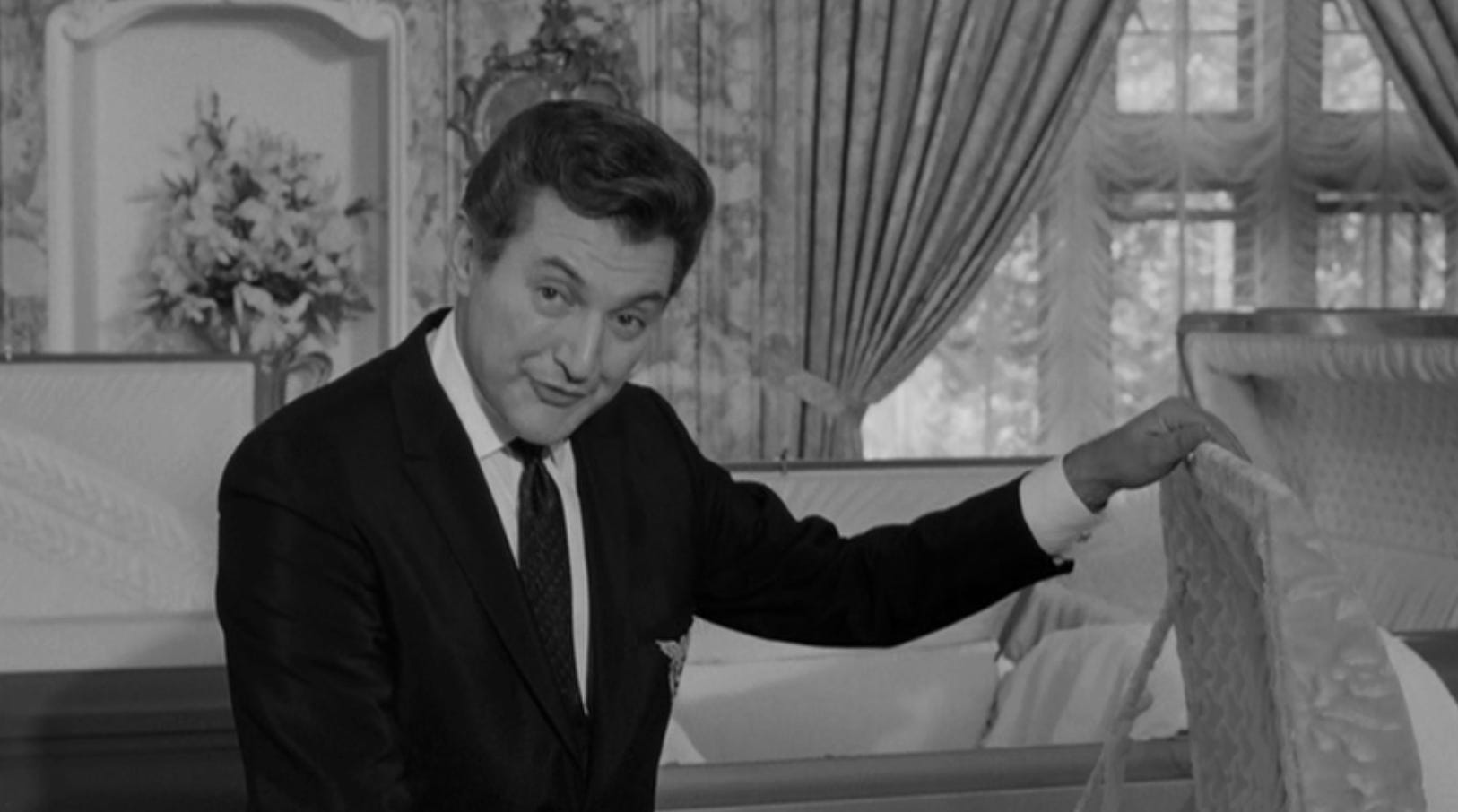
Continuing the Waugh theme, I asked Jack if he’d seen or read The Loved One. He responded with a verbatim repetition of Liberace's casket salesman speech. Lyle explained that his friend’s interest in the film was professional. Jack was a funeral director.
I felt the need to tidy myself after hearing the news.
Informed by our waiter that the washroom was on the second floor, I was directed to a narrow staircase. As soon as I began my ascent, a staff member on his way down moved out of my way so violently, I feared he might fall over the balustrade.
The single-occupancy room was so spotless, I thought it might have been only for show. The toilet tissue was wrapped in silk ribbon, unused. I wondered as I washed my hands if the very wealthy attended to their bathroom functions themselves, or if they had people to do it for them.
I made my way downstairs without incident and returned to find my diaper folded neatly on the table. Our sixth course, Snake River Farm Calotte de Boeuf Grillée, was served and consumed without much comment. It was excellent. Technically perfect.
Of course it was.
But something was not quite right, though I couldn't quite put my finger on it. The food was uniformly beautiful, flavorful, and perfectly executed to the detection of both my eyes and palate. The dishware and silver were conversation pieces. The rooms were well-appointed and understated as if to offset the fact that the building was once a brothel.
And the staff? The thought of them left me rather cold. Or was that the Glacé des Fruits Exotiques placed before me after the cheese course?
Below the smooth, perfect surfaces of The French Laundry, there was a subtle uneasiness, a tautness under its skin.
I scanned the members of the staff. Everyone was clean, attractive, and well tailored. They smiled, but not too widely, as though no one should have a better time than the guests. Eye contact was always just narrowly avoided.
Or did I imagine that?
When our waiter made any attempt at levity, he immediately followed up with, "I am only joking!" The palpable fear of giving offense fascinated me. There was a Stepford-like quality to the front-of-house employees.
When he spoke at the Commonwealth Club, Thomas Keller stated that "Cooking is about repetition—the perfection of the task at hand." Keller may have perfected his cooking that way, but that repetition makes its way into the dining room as well, which isn’t great, since no two diners are exactly alike, and most people I know prefer their interactions with other humans to be unrehearsed. When our food was brought to the table, it was described in great detail, but the delivery felt scripted. No hint of color or personality.
When our bill was presented, we were disappointed, but not offended that we’d been charged $50 for uncorking one of the bottles we'd brought with us (the second remained unopened). In my experience as a fine dining waiter, if a guest brings a bottle of wine but purchases a bottle from a restaurant's wine list, the corkage fee is waived. It struck a slightly sour note at the end of the evening.
The fact that I had wrangled a last-minute Friday night reservation for Keller and Hamilton at Kokkari (where I worked at the time) without so much as a thank you the week prior only added to the disappointment.
As we looked over our bill, Jack made a generous offer—he would pay for the food if the rest of us took care of the wine. The waiter, who stood between Lyle and Jack, offered that he’d be happy to split the check four ways, if we liked. Jack told him that wouldn't be necessary and that we just needed a minute to discuss.
Instead of leaving us to work things out amongst ourselves, the waiter picked the bill up off the table and, in what I hoped was an attempt to be helpful, read our bill aloud.
"Food: $1,020... Wine: $166..."
Now everyone in the room knew how much money we’d spent. Perhaps our waiter thought that a guest at one of the other tables might avail us of his or her superior math skills.
We were, all of us, quietly horrified.
The check was ultimately paid. Shortbread cookies and copies of the night's menu were distributed, two round coasters with the restaurant's name on them that looked like dress shields were pocketed, and we left.

On the drive home, we discussed our experience. We'd all enjoyed it, more or less. The food was wonderful, but only the little Tokyo turnips and chocolate-covered macadamia nuts were hailed as "amazing." We were well sated bodily. Just enough food, just enough wine. But none of us thought it was truly fantastic.
Not the best meal of our lives. Which, I suppose, is fine.
There must be such tremendous pressure in operating an institution like The French Laundry. It's a shrine to which many come expecting miracles. With a $240* ($270 if one opts for foie gras) per person price tag, one almost demands them. How can one restaurant satisfy all the unspoken expectations of, well, everyone who has ever dined there, or ever will?
It can't.
Perhaps Mr. Keller is correct in his approach of uniformity and repetition. It seems to be working for him and, I'm sure, the majority of diners there. It’s his consistency that has kept his machinery well-oiled and running more or less smoothly since 1994. It’s just not for me. I’m not a fan of perfection, which I can accept as either my own virtue or my own flaw. Whatever the case, it’s my own.
But I am grateful to have had the experience.
Now if he could just get his waitstaff to loosen up.
*This was the price in 2007. The cost is now $425 per person.
"When we visit, we pack our emotional baggage full of inflated expectations and drag it behind us through the little garden and across the front door’s threshold. It is the one thing the hostess who greets you is unable to check."
THIS. Perfection.
And not at all uniformally predictable.
Thx for a great read Michael ..
It’s now illegal for a restaurant in California to serve foie gras. That is as it should be.
I enjoyed dining out like this in my former life, but the reverence was always a turnoff. Food should be joyful! As for waitstaff, the truly well trained server is invisible until her or his input is needed. That fuss over the check was inexcusable.